
For the First Time: Willian Oliveira and Tonha Bring Brazil to the World Championship Podium
Brazilian physical educator William Oliveira claims historic gold in canicross at 2025 IFSS Dryland World Championships

Minocqua, Wisconsin — Three days of travel. A 10-hour flight followed by a 17-hour drive through unfamiliar American highways. A dog detained at CDC. Equipment failures minutes before competition. And the weight of a nation's expectations on his shoulders.
For Willian Oliveira and his dog Tonha, the path to the 2025 IFSS Dryland World Championships was anything but simple. But on October 25, 2025, at Minocqua Winter Park in Wisconsin, that journey culminated in a moment that had never happened before: the Brazilian national anthem played at an IFSS World Championship for a canicross victory.
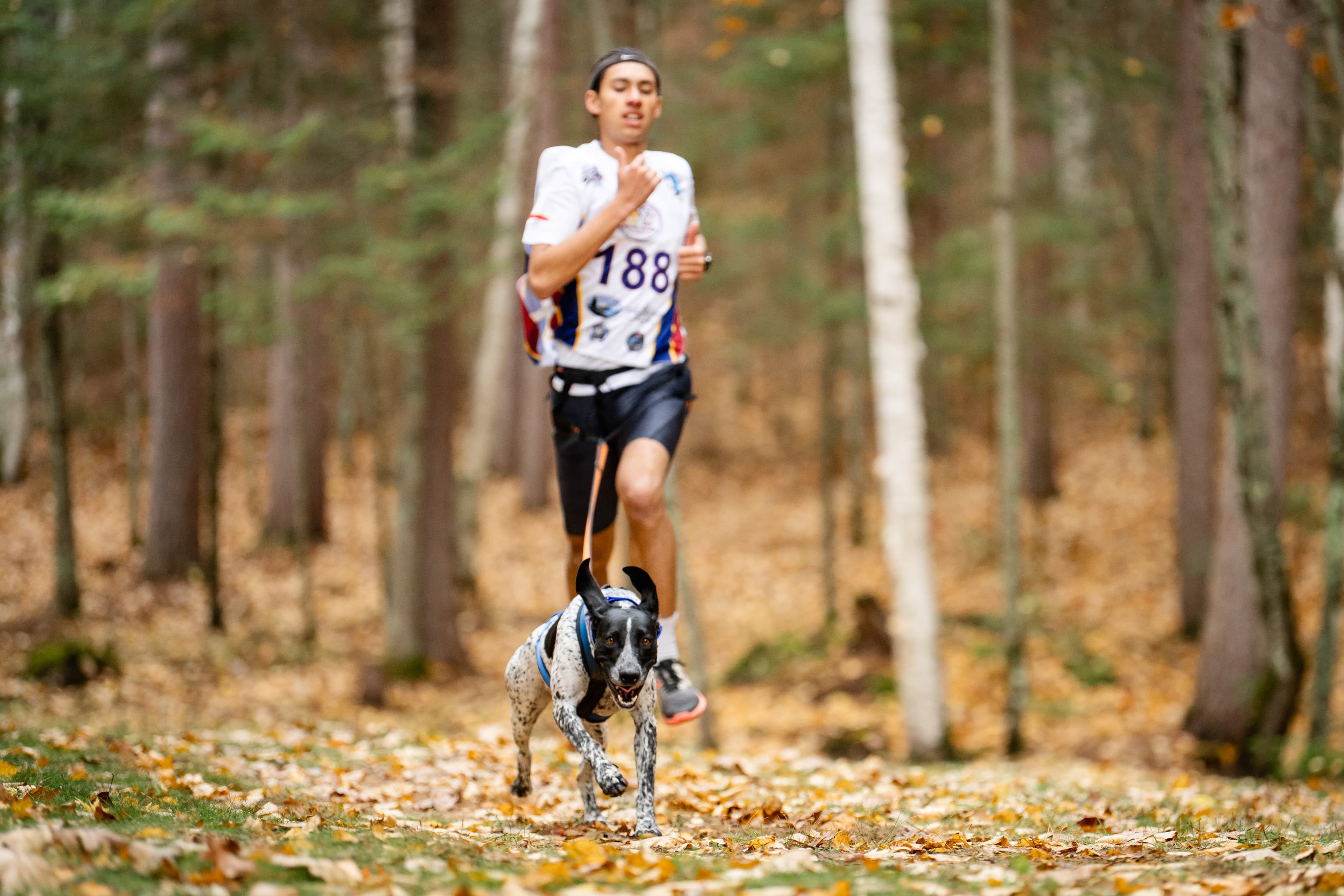
Oliveira, a physical educator from Rio de Janeiro, won gold in the Men's Masters 50+ Canicross category with a combined time of 24:23.6 across two heats. He led from start to finish, posting the fastest time in both the first heat (12:14.5) and second heat (12:09.1), improving his performance by five seconds on the final run.
For Brazil, a country where sleddog sports remain niche despite a growing community of enthusiasts, this represented uncharted territory.
The Journey to Wisconsin
Oliveira and Tonha departed Brazil on a Sunday, arriving in Minocqua only on Wednesday — exhausted but, as Oliveira emphasized, "not broken."
The logistics alone told a story of dedication: six hours driving to the airport, a 10-hour international flight, then 17 hours driving from New York to northern Wisconsin. During the journey, Tonha was held at the CDC for inspection, adding another layer of stress to an already grueling trip.
"We arrived exhausted, but not broken," Oliveira wrote in his post-race account.
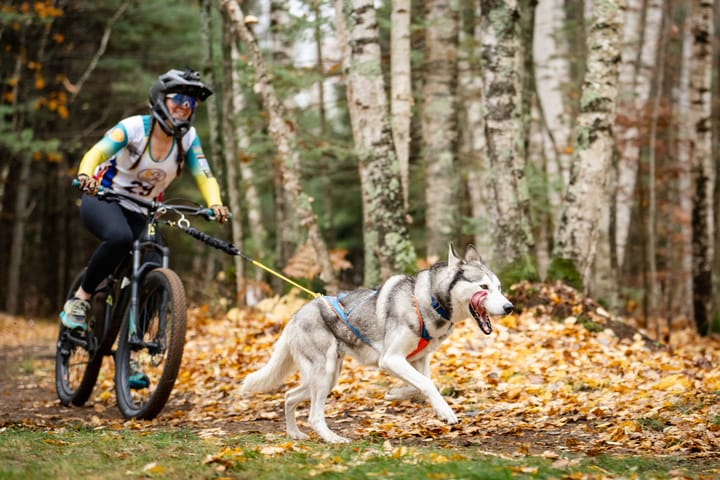
After limited course reconnaissance focused on his primary discipline — bikejoring — Oliveira and Tonha began competition on Tuesday. The bikejoring results were bittersweet: fourth place in the Men's Masters 50+ category, finishing 54.7 seconds behind the podium. Close, but not close enough.
"Bikejoring was our main discipline," Oliveira said. "'Almost' wasn't acceptable. It hurt. It hurt for real."
The Unexpected Gold
Oliveira had registered for canicross late, viewing it as a secondary event. He expected Tonha to be tired after two days of intense bikejoring competition. He had zero expectations.
But when they started the first canicross heat, everything changed.
"On the very first uphill, it was clear: she didn't come to jog. She was full power," Oliveira recalled.
Navigating sections of trail they hadn't reconnoitered during their bikejoring preparations, Oliveira focused on one thing: not getting in Tonha's way. In the final 600 meters, he emptied his reserves.
Two minutes after crossing the finish line, Tonha was breathing through her nose, mouth closed — a sign of exceptional recovery that impressed onlookers. Someone captured on video remarked: "This dog could do it again!"
Starting first, Oliveira couldn't gauge his competition during the heat. Following his routine, he got in his car and left the venue. On the drive back, calls started flooding in.
"You're in first. Twenty-two seconds ahead."
The lead was substantial, but far from secure. Day two would decide everything.
The Weight of a Nation
The next morning, Oliveira opened Instagram and saw a live video from Márcio Cerqueira — one of Brazil's top dog sport trainers — talking about him, emotional and crying. Other friends had posted about his first-day performance.
"That's when it hit me: I wasn't running just for myself anymore. I was running for a nation."
The pressure manifested physically. When Norwegian friends Tessa, Mikal, and Blanka asked if he was nervous at breakfast, Oliveira admitted he was.
He followed his pre-race ritual: washing breakfast dishes for his Norwegian friends, walking Tonha, listening to the prayer a friend sent each morning. He called his wife, talking about random things, trying to convince his mind it was just another training run.
But it wasn't.
Starting with a 22-second lead over second place and 59 seconds over third, Oliveira knew the margins were tight. The second-place team would start just 30 seconds after him — dangerously close.
"I pushed hard at the start to stay out of his dog's sight," Oliveira explained. "Those 3,650 meters felt like 30 kilometers."
After four consecutive days of high-level competition, Tonha was still there: strong, line tight, full power. They crossed the finish line and improved their time by five seconds.
Oliveira looked back and celebrated — quietly, but he celebrated.
And of course, Tonha was already breathing through her nose again.
The Anthem Moment
On the podium, Oliveira stood with Tonha as the Brazilian national anthem played at an IFSS World Championship for the first time in the sport's history.
"That moment was magic," Oliveira said. "For the first time in the history of these sports, the Brazilian national anthem played. And I was there. With Tonha. Living something I'll never forget."
The achievement represents more than personal triumph. Since 2012, when a German athlete demonstrated canicross at a mountain bike event in Saquarema, Rio de Janeiro, Oliveira has been instrumental in building the sport across Brazil. He co-founded the Liga Brasileira de Canicross e Similares (LBCANIS) in 2021, expanded the sport from Rio to São Paulo and Minas Gerais, and has worked internationally as a physical educator and trainer for the Non-stop dogwear International CaniX team.
His competitive resume includes four Brazilian canicross championships, three Brazilian bikejoring championships, the 2018 South American championship (with his Braco Alemão dog Xico), and a 2022 Latin American silver medal in bikejoring.
But this gold medal in Wisconsin carried different significance — it proved Brazilian athletes could compete at the highest level in a sport still finding its foothold in their country.
The International Community
Throughout the championship, Oliveira encountered support from unexpected sources. When his bike brakes failed the day before competition, then his derailleur battery died an hour before the start, a fellow competitor in his age category helped him fix the equipment. In canicross, a friend ensured everything went smoothly at the start and finish, holding Tonha during warm-up and caring for her immediately after the race.
"That motivated me; it was good not to feel alone," Oliveira said. "I care a lot about people, so this ended up being very positive. But I didn't want to disappoint them."
The community aspect of sleddog sports — competitors helping competitors, international athletes supporting each other despite competing for the same medals — defined Oliveira's championship experience as much as the racing itself.
Tonha: The Exceptional Athlete
While Oliveira's victory rightfully earned headlines, Tonha's performance deserves equal recognition. Her physical conditioning, mental fortitude, and recovery capacity impressed even seasoned observers.
"She's not very strong, but she's very fast," Oliveira explained, analyzing their team dynamic. "She has incredible physical conditioning, perhaps one of the most physically fit dogs I've ever seen."
On the technical course, Oliveira leveraged their complementary skills: "I try to go as fast as I can on the climbs and flat sections. She descends very well, and so do I; I come from trail running, so I have good downhill technique. At this point I rest a bit without wasting time."
Their preparation benefited from familiarity — near their Rio de Janeiro training base, they had access to trails remarkably similar to the Minocqua course, providing critical conditioning advantages.
Looking Forward
At 50+ years old, Oliveira continues competing at elite international levels while simultaneously building infrastructure for future Brazilian athletes. His work with LBCANIS, his training programs published through Non-stop dogwear, and his advocacy for animal welfare in dog sports demonstrate commitment extending beyond personal achievement.
The 2025 gold medal opens doors. It proves Brazilian athletes, Brazilian dogs, and Brazilian training methodologies can succeed on the world stage. It provides inspiration for the growing community of canicross enthusiasts across Brazil. And it establishes a precedent: Brazil belongs in international sleddog sports competition.
"I was happy with my performance," Oliveira reflected, "but Tonha's performance was terrifying to me."
The partnership between athlete and dog — built on trust, training, and mutual respect — produced a historic result. But more importantly, it demonstrated what becomes possible when pioneer trailblazers refuse to accept limitations, endure brutal logistics, and compete with national pride driving every step.
The Brazilian national anthem had never played at an IFSS World Championship before October 25, 2025. Now it has. And Willian Oliveira and Tonha ensured it won't be the last time.
Willian Oliveira competes for Wol Team under the governance of LBCANIS - Liga Brasileira de Canicross e Similares. He also placed 4th in the Men's Masters 50+ Bikejoring category at the 2025 IFSS Dryland World Championships. The event, held October 21-26 at Minocqua Winter Park in Wisconsin, marked the first time the IFSS dryland World Championships were held in the United States.






Comments ()